
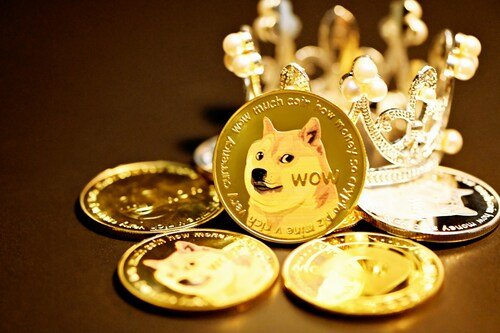
Dogecoin is often viewed as a fun and friendly cryptocurrency, but when you dig deeper into its economics, you’ll find that its supply model is radically different from many of its peers.
While Bitcoin grabs headlines for its capped supply of 21 million coins and Ethereum for its evolving monetary policy, Dogecoin quietly follows a path that bucks the deflationary trend—and that’s by design.
Dogecoin was launched in December 2013 as a lighthearted alternative to Bitcoin. It started as a meme, but over time, it built a passionate community and became a serious digital asset. One of the most talked-about aspects of Dogecoin is its inflationary supply. Unlike Bitcoin, which has a hard cap and a halving schedule that slows down the creation of new coins over time, Dogecoin has no maximum supply. In fact, approximately 5 billion new DOGE are added to circulation each year.
At first glance, this might sound like a recipe for disaster. Isn’t inflation bad? Doesn’t more supply mean less value? These are valid questions—and ones that deserve more than a surface-level answer. The reality is that Dogecoin’s inflation model offers a different set of advantages, especially when viewed through a long-term lens.
To understand why Dogecoin’s supply model exists, it helps to know the backstory. Initially, Dogecoin had a capped supply—100 billion coins. But in 2014, the developers removed that cap, choosing instead to create a fixed issuance of 10,000 DOGE per block, or about 5 billion per year. This decision was driven by concerns that a deflationary supply might lead people to hoard their coins rather than use them. After all, if something is guaranteed to go up in value over time due to limited supply, why spend it?
With a constant and predictable inflation rate, Dogecoin was positioned as a better medium of exchange. People could tip others online, donate to causes, and pay for small transactions without worrying that they were giving away an appreciating asset. This use-it-don’t-hoard-it philosophy made Dogecoin one of the few cryptocurrencies genuinely adopted for payments in its early years.
It’s also worth noting that Dogecoin’s inflation rate is decreasing over time in percentage terms. While 5 billion DOGE are minted every year, the total circulating supply keeps increasing, which means the annual inflation rate gradually drops. In 2015, the inflation rate was around 5%, but today it’s closer to 3.5%, and it will continue to decline. At some point, it will level off at a relatively low and stable rate, much like fiat currencies aim to do—though without the central bank.
This brings us to a critical point: Dogecoin’s inflation isn’t arbitrary. It’s predictable, transparent, and baked into the protocol. That’s very different from government-issued currencies, where inflation is managed by central banks and subject to political and economic pressures. In contrast, Dogecoin’s inflation is purely mathematical and cannot be altered without community-wide agreement and a software update.
In recent years, especially during times of economic uncertainty and rising inflation, many investors have turned to cryptocurrencies as a hedge against fiat devaluation. In that context, Dogecoin’s unlimited supply may seem like a disadvantage. However, DOGE isn’t trying to be digital gold. Instead, it’s aiming to be digital cash—an accessible, fun, and user-friendly currency that can be spent freely without worrying about long-term scarcity.
Another advantage of Dogecoin’s model is the ongoing incentive for miners. With a steady block reward, miners remain motivated to secure the network. This is in contrast to Bitcoin, where block rewards are halved every four years, eventually relying entirely on transaction fees to sustain mining operations—a system that raises concerns about long-term sustainability.
Dogecoin’s supply model also plays a role in its price behavior. It tends to experience large price surges during crypto bull markets, often driven by retail enthusiasm and viral internet campaigns. But during bear markets, its inflationary nature helps moderate extreme price appreciation, reducing volatility compared to highly speculative altcoins.
In summary, while Dogecoin’s unlimited supply may sound counterintuitive in the world of digital scarcity, it serves a clear and intentional purpose. It makes DOGE a spendable, approachable currency, while offering predictability and sustainability for those who support the network. It may not be the next digital gold, but for those looking for a straightforward, no-frills crypto designed for everyday use, Dogecoin’s inflation model makes more sense than meets the eye.